

Got questions or need assistance with your Industry needs?
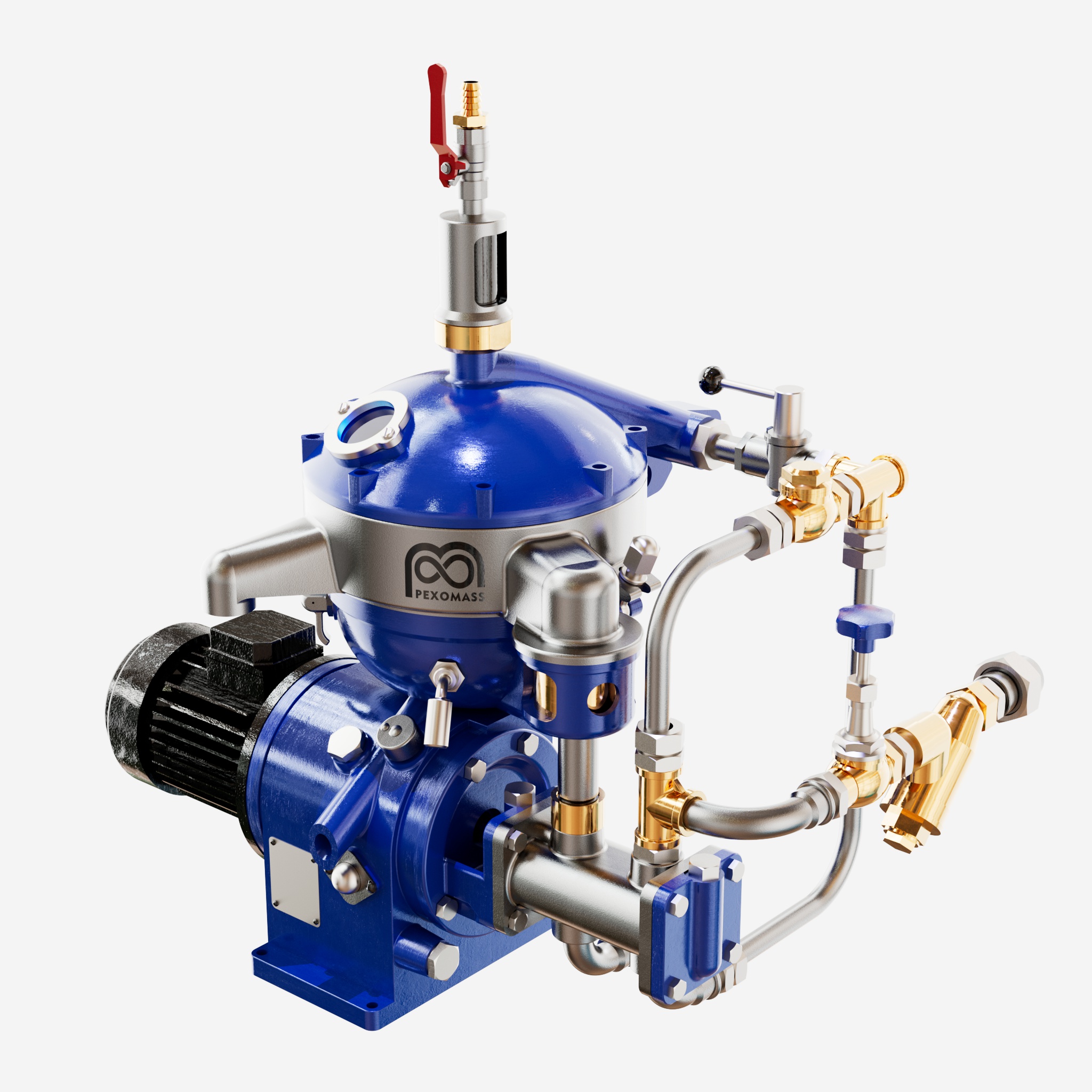
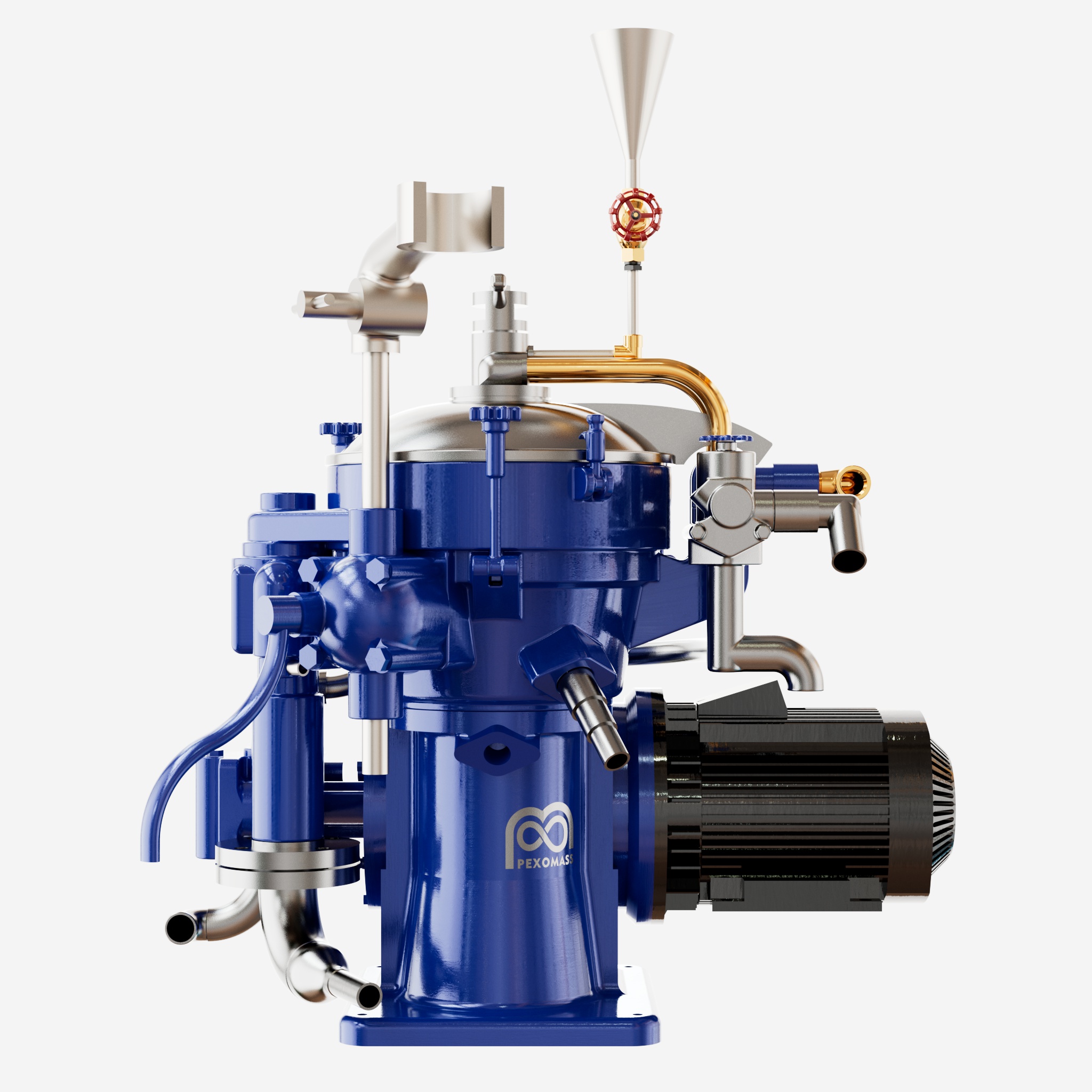
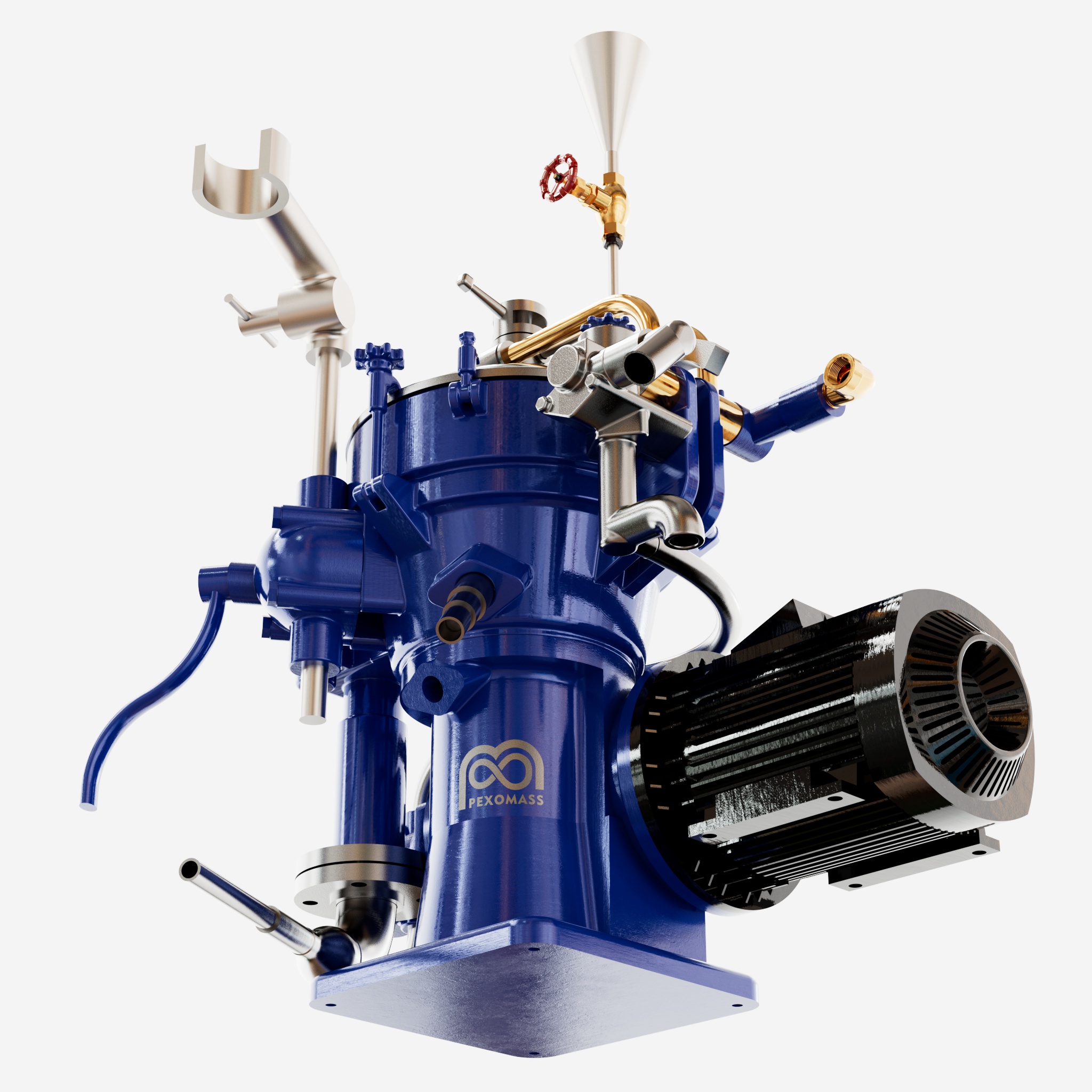
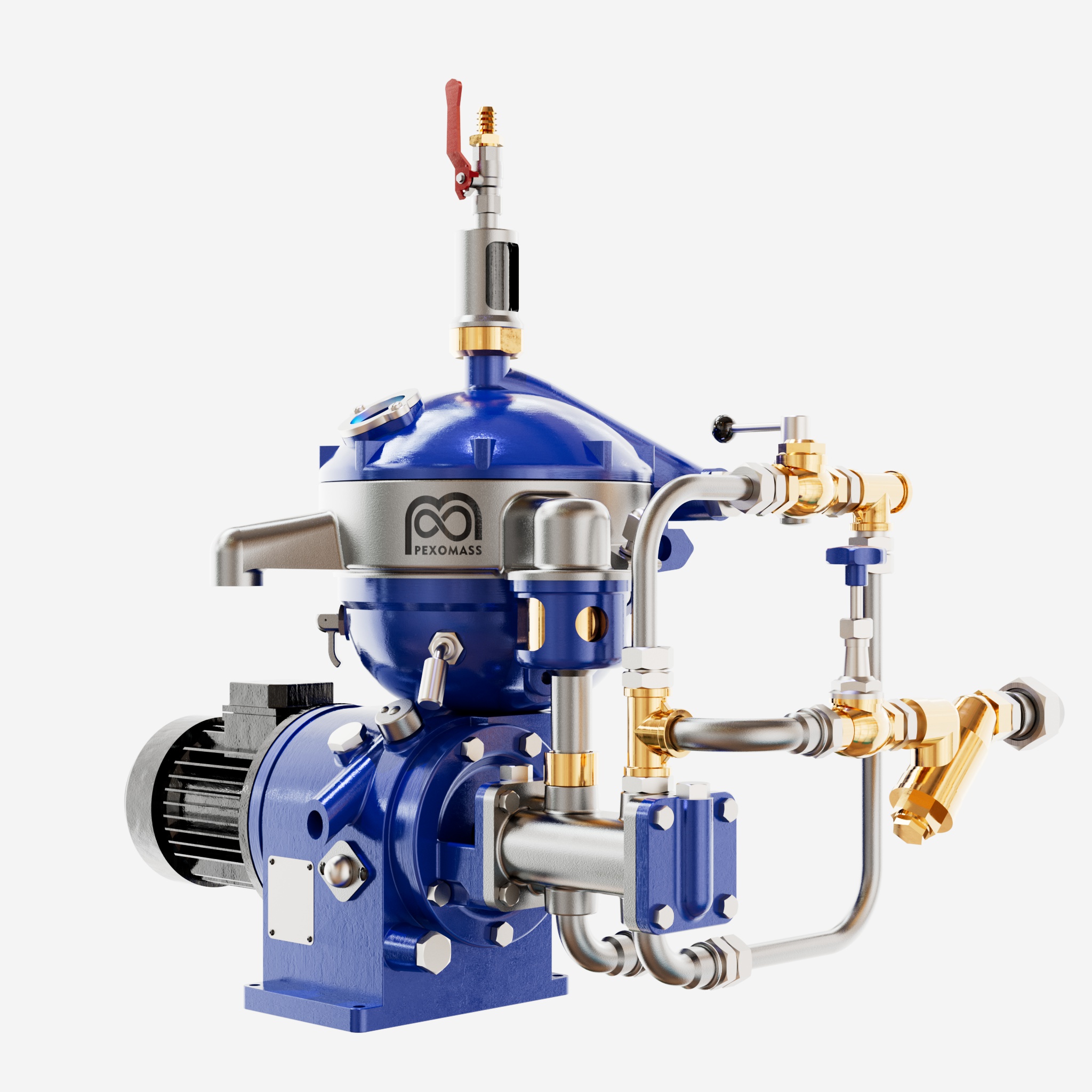
An industrial centrifuge is a mechanical device that uses centrifugal force (g-force) to separate substances or particles of different densities within a liquid or mixture. Industrial centrifuges offer a wide range of applications, such as separation, clarification, and filtration of various substances. These industrial centrifuges are widely used in various industries and applications, including beverage, dairy, bio-diesel, food processing, renewable resources, chemical, biotechnology, pharmaceutical, marine, energy, oil & gas, environmental, mining, and others. Industrial centrifuges are versatile machines designed to separate solids and liquids or separate different liquids based on their densities and other physical properties. Centrifuge equipment is used for the following key centrifuge applications.
Vg = d² (Pp – P1) / 18n x G
where:
Vg = Gravitational Settling Velocity (m/s)
d = Particle Diameter (m)
Pₚ = Particle Density (kg/m)³
P₁ = Liquid Density (kg/m)³
G = Gravitational Acceleration (kg/ms)
n = viscosity of the liquid (m/s)²
Gravity sedimentation relies on the force of gravity to separate particles based on their settling rates. This method of separation is slow compared to centrifugation and may require longer settling periods to achieve the desired separation. High-density minerals settle more rapidly than low-density minerals. Lower temperatures will increase viscosity, decreasing the fall velocity. The particle will be initially accelerated due to gravity, but eventually, the gravitational and drag forces reach an equilibrium, resulting in constant “terminal fall velocity.”
Replacing the gravitational acceleration with the acceleration generated by the rotating centrifuge results in faster sedimentation. Centrifugal acceleration can be thousands of times greater than that of gravity; therefore, the sedimentation centrifuge rate is thousands of times greater. Sedimentation centrifuge (centrifugation) is preferred when rapid and efficient separation is required. Industrial centrifuge equipment utilizes centrifugal force for quick and precise separation.
With basket centrifuges, the liquid is inserted into an internal basket. The basket then rotates at a high velocity, forcing higher-density materials to the interior wall, where they are trapped by a snap-in cloth filter media. Materials that contain a lighter specific density, on the other hand, pass through the filter mesh screen (cloth or series of screens) and exit the bowl through a series of punctures on the wall of the basket. For example, in the case of solids and liquids, the liquid will pass through the filter and perforations while the solid material will remain inside the basket. The speed of a basket centrifuge is limited to a specific amount of revolutions per minute, or RPMs.
The industrial decanter centrifuge design is often called a continuous scroll discharge centrifuge. It generally rotates about a horizontal axis. A decanter centrifuge features an elongated cylinder with a conveyor in the center. The cylinder spins at a different velocity, which in turn pushes denser material to the exterior wall. The conveyor then distributes these solids to the opposite end of the decanter centrifuge, where it is discharged.
It operates much in the same way as a basket centrifuge, with one substantial difference. The inner centrifuge bowl is equipped with a disc stack (conical discs) in the center by an inlet. The bowl discs (conical discs) are stacked on top of each other, providing a high additional separation surface area. The result is a smoother and faster separation process, greater capacity, and higher RPMs than a traditional basket centrifuge. Typical industries include biotech pharmaceuticals, dairy, environmental, chemicals, oil and gas, energy and utilities, food and beverage, industrial machinery, marine and transportation, pulp and paper, and steel.
Chamber Bowl Separator : it is used for polishing liquids in the chemical and pharmaceutical industries, particularly when, in addition to the clarified liquids, solids must be simultaneously recovered and/or must be obtained in the form of a dry cake. Additionally, they are used when because of the erosive character of the solids, continuous centrifuges cannot be employed.
Clarifier : A clarifying centrifugal separator is used for separating solid particles from a liquid. The clarifier separator is equipped with a stack of bowl discs (conical discs) for creating a large equivalent clarification area in a relatively small bowl volume.
Nozzle Separator : A nozzle centrifuge is a continuously operating machine that clarifies liquids while concentrating solids. A built-in centripetal pump discharges the clarified liquid. The concentrated solids are discharged continuously through nozzles.
Purifier : A purifying centrifugal separator is a machine in which two liquids of different densities are separated from each other. The solids may also be separated at the same time.
Peeler Centrifuge : It is equipped with a screen designed to handle batch processes. After a slurry batch is injected into the centrifuge, the material is then passed through the screen, which prevents the denser solids from seeping through. This cake of materials is then peeled off by the arm and discharged from the device. Typical applications include bulk chemicals, fine chemicals, pharmaceuticals, plastics, and food industries.
Pusher Centrifuge : As with a basket centrifuge, spinning the bowl of a pusher centrifuge causes the liquid inside to exit out of a side wall. However, once the basket is devoid of liquid, a pusher centrifuge has a dedicated arm that scrapes the interior and pushes the solid material from the rear of the basket, which in essence, allows the basket to process the next batch immediately. Also called a horizontal basket centrifuge, a pusher centrifuge is designed as a continuous filtration centrifuge for solid and liquid separation.
Tubular Centrifuge : A tubular centrifuge consists of an extended vertical bowl that is primarily used for continuously separating liquids from liquids. As the centrifuge bowl spins, liquid of a lesser specific density is contained within the middle, whereas liquid of a greater specific density is routed to the exterior walls. Naturally, to maintain separation, each liquid is provided with its own discharge point. Any small solids contained therein must be removed through a manual process.
We implement rigorous quality control measures at every stage of production, ensuring consistency and high standards.
We implement rigorous quality control measures at every stage of production, ensuring consistency and high standards.
We implement rigorous quality control measures at every stage of production, ensuring consistency and high standards.
We implement rigorous quality control measures at every stage of production, ensuring consistency and high standards.
We implement rigorous quality control measures at every stage of production, ensuring consistency and high standards.
Join us to experience cutting-edge industrial solutions that drive innovation, lasting success.

PEXOMASS is idea that has been taken place as a Additional Industrial solutions which can be provided alongside the journey of FIDICON which started back in 2002.
Manish Singh: +91-9898876333
(Sales & Marketing Manager)
Avanish Mishra: +91-9898033783
(Project Engineer)
Landline Number:
+91 – 2646-299255 / 299355
Email : sales@pexomass.com
Email : info@pexomass.com
Plot No. 5138, GIDC, Ankleshwar, Dist: Bharuch, Gujarat, India. Pin: 393002.
Copyright © 2023 Pexomass. All Rights Reserved.

Viscosity, density (specific gravity), particle size and shape are all important factors to be considered in both gravity settling and centrifugal separation. Stokes Law provides a basic formula for predetermining the theoretical rate of sedimentation under the force of one gravity. It states that a particle moving through viscous liquid attains a constant velocity or sedimentation rate. The sedimentation rate can be very slow for particles whose density is close to that of the liquid, for particles whose diameter is small, or where the viscosity is high.