

Got questions or need assistance with your Industry needs?
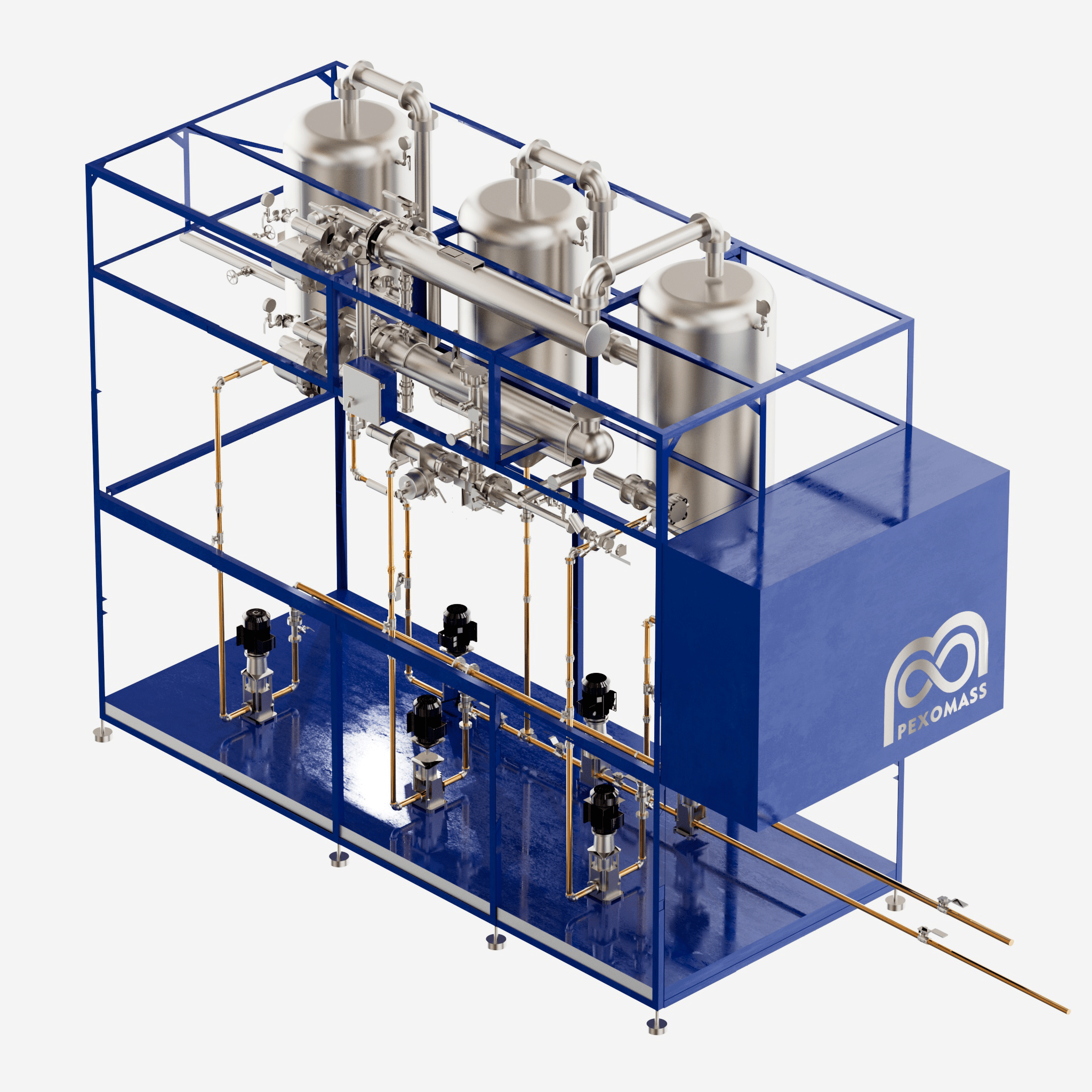
A multi-effect evaporator is a type of industrial equipment used for concentrating solutions by evaporating the solvent (usually water) from a liquid mixture. It utilizes the principle of heat transfer to efficiently remove water or other solvents from a liquid, resulting in a more concentrated solution or a solid product. Multi-effect evaporators are commonly used in various industries, including food and beverage, pharmaceuticals, chemicals and wastewater treatment.
The term “multi-effect” refers to the fact that these evaporators consist of multiple evaporator vessels, or “effects”, that are interconnected. The heat generated in one effect is used to drive the evaporation process in subsequent effects, increasing energy efficiency. This is achieved through the use of steam or another heat source that transfers heat from one effect to the next
We implement rigorous quality control measures at every stage of production, ensuring consistency and high standards.
We implement rigorous quality control measures at every stage of production, ensuring consistency and high standards.
We implement rigorous quality control measures at every stage of production, ensuring consistency and high standards.
We implement rigorous quality control measures at every stage of production, ensuring consistency and high standards.
We implement rigorous quality control measures at every stage of production, ensuring consistency and high standards.
Join us to experience cutting-edge industrial solutions that drive innovation, lasting success.

PEXOMASS is idea that has been taken place as a Additional Industrial solutions which can be provided alongside the journey of FIDICON which started back in 2002.
Manish Singh: +91-9898876333
(Sales & Marketing Manager)
Avanish Mishra: +91-9898033783
(Project Engineer)
Landline Number:
+91 – 2646-299255 / 299355
Email : sales@pexomass.com
Email : info@pexomass.com
Plot No. 5138, GIDC, Ankleshwar, Dist: Bharuch, Gujarat, India. Pin: 393002.
Copyright © 2023 Pexomass. All Rights Reserved.
